Surface Veil
A solo show of Matthew Herriot’s abstract paintings
Curated by Héloïse Paillard
March 14 - April 18, 2026
2334 West 111th Place, Chicago, IL 60643
Contact: Susannah Papish, Director
773-316-0562
Abstraction, to Matthew Herriot, is about seeing clearly. In Surface Veil, Herriot utilizes subtly textured black paint on reflective aluminum, reconfiguring painting from static images into perceptual systems in which time, light, and attention function as coextensive materials.
Herriot paints using a structured method of scraping and dragging acrylic across anodized aluminum surfaces, a process defined by manual inaccuracies—the uneven drag of the scraping tool, subtle shifts in pressure, and the inconsistent behavior of paint shaped by its viscosity and drying time. These imperfections are not so much the result of conscious decisions as the visible presence of human error and material failure, both of which prove generative: small deviations in Herriot’s procedure lead to unanticipated results.
Yet the Surface Veil works do not depend entirely on mechanical accident. The imposition of a black rectangle is a deliberate compositional choice—operating either as interruption, obstruction, focal point, or stabilizing counterweight. The black rectangle further produces an interplay between material opacity and optical space. In certain light, its brushed texture is revealed, pulling it in front of the remainder of the painting as an opaque surface layer. In other light, its texture visually dissolves, causing it to recede into a dark void that optically extends far beyond the surface. Shifts in illumination and viewing angle therefore transform each painting’s spatial hierarchy, with the black rectangle and surrounding scraped passages repeatedly exchanging roles between figure and ground.
These spatial reversals position Surface Veil as a response to image-based perceptual habits in painting. Our initial reaction when looking at a painting is to scan and categorize it—for instance by comparing the work to a prominent art historical style or contemporary trend. Once this process concludes and the viewer recognizes the painting as familiar, perception closes. This tendency is intensified in the digital age by our fast-paced, superficial consumption of images online. In Surface Veil, Herriot aims to extend perceptual engagement beyond quick recognition or style categorization. Instead, the painting unfolds over time, as subtle shifts in lighting and viewpoint actively reorganize its form, preventing its reduction to a single image.
The site-specific lighting at boundary creates a curatorial pathway for the viewer to walk through and experience the works in their varied perceptual configurations. The precise installation makes real light an active protagonist in the work, advancing a phenomenological language of abstraction—one in which a painting exists only in dialogue with its surroundings and, most importantly, its audience.
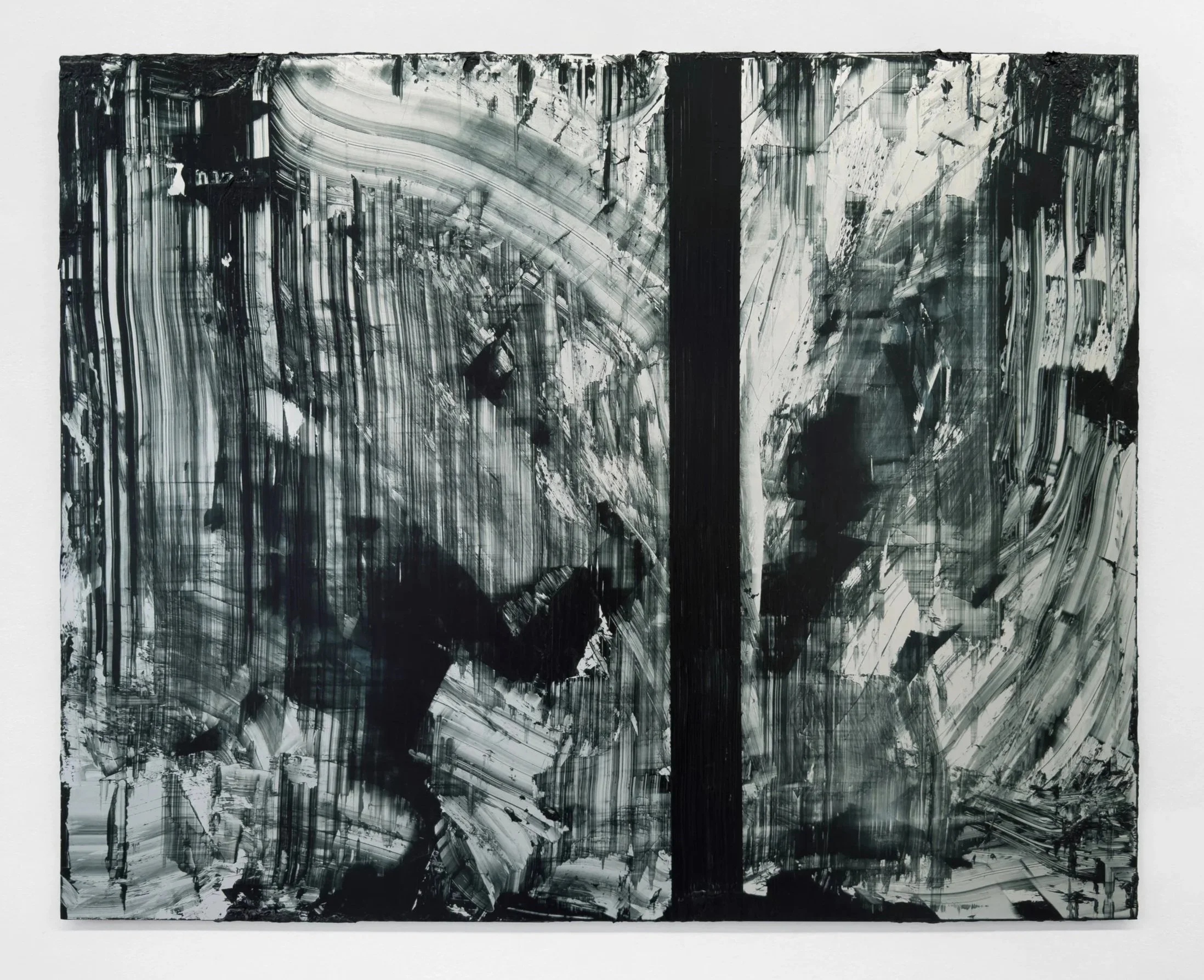
Matthew Herriot, Surface Veil III, 2025, Acrylic on anodized aluminum, 24 x 30 in.
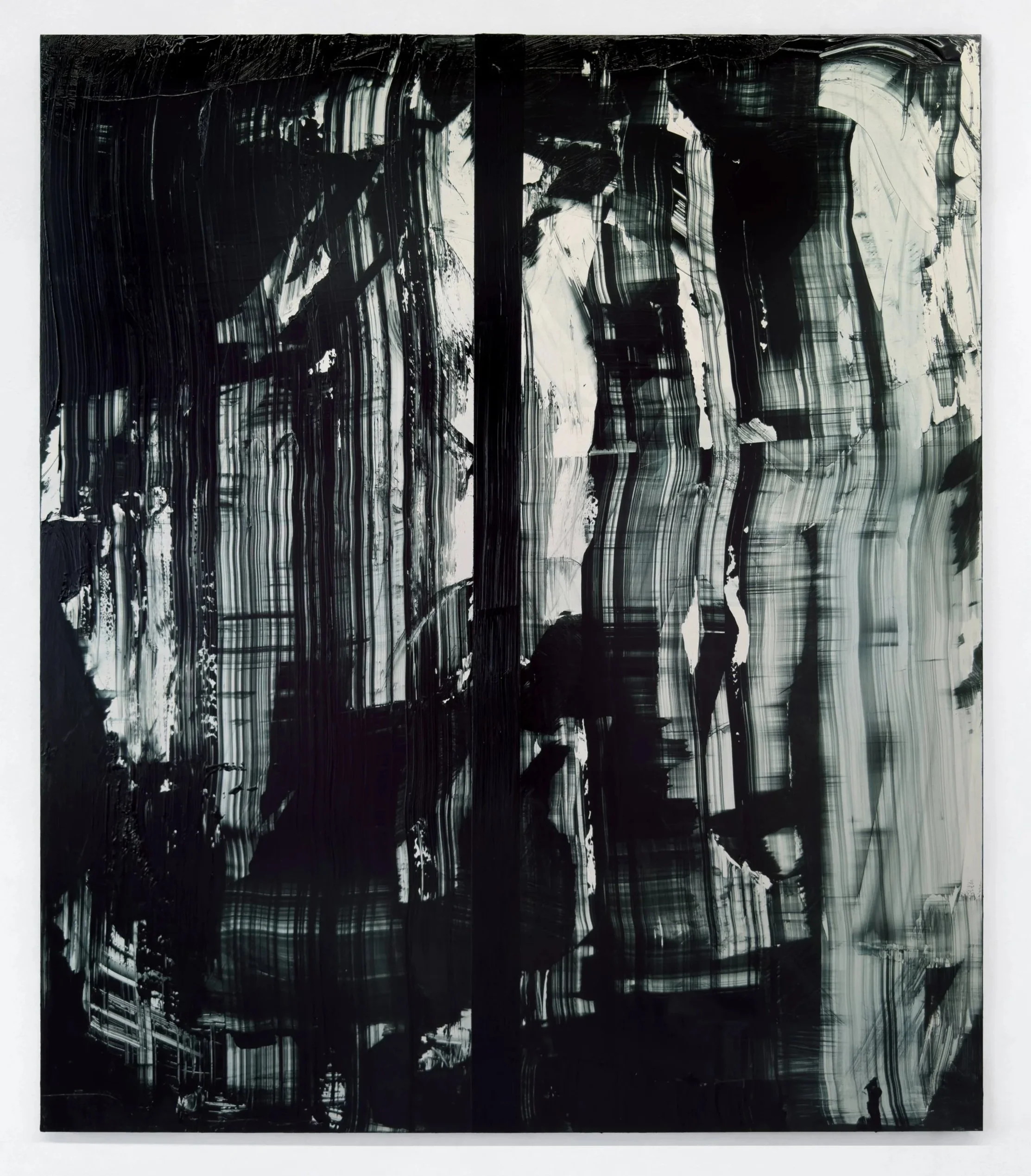
Matthew Herriot, Surface Veil VII, 2025, Acrylic on anodized aluminum, 42 x 36 in.
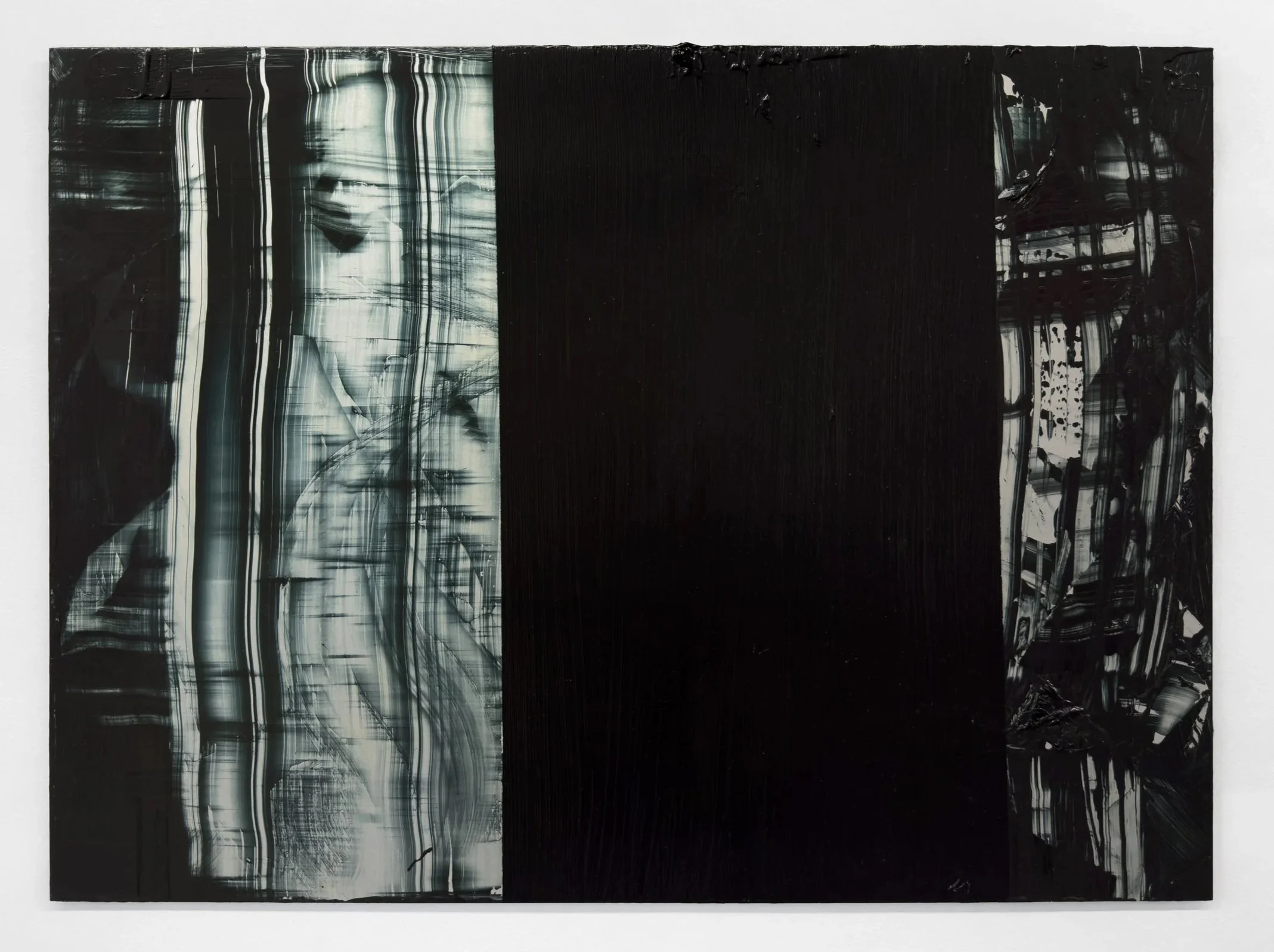
Matthew Herriot, Surface Veil IV, 2025, Acrylic on anodized aluminum, 22 x 30 in.